www.itv.com A US jet broke the sound barrier over England on the way to Heathrow, London. The sonic boom caused loud explosions heard across the east of the country. The noise caused shaking and smashed windows and prompted calls to police.
The Ministry of Defense said a Typhoon jet from RAF Coningsby in Lincolnshire was launched when communication was lost with a Heathrow-bound plane. It is understood the plane, travelling from the USA, landed without incident.
www.great-britain.co.uk The Cambridgeshire Police received reports of smashed windows. A woman caller said she was walking her horse around the arena, when she heard a thunderous bang, 10 times louder than thunder. The horse reacted immediately. She thought it might have been an explosion.
Most of the people who rang said they'd never heard anything so loud in their lives.
One man reported the noise from as far away as St Ives, on the far westerntip of Cornwall. He thought something had hit his roof because the whole house shook. The noise was so loud another person thought his neighbor's house had blown up. As an aside, I love St.Ives. All my books are written about St.Ives and Cornwall. In the futuriscic, fantasy adventure series, the characters call the place Saint Eyes.
www.telegraph.co.uk What causes a sonic boom?
When an aircraft approaches the speed of sound (768mph), the air in front of the nose of the plane builds up a pressure front because it has "nowhere to escape", Dr Jim Wild of Lancaster University explained to the BBC.
A sonic boom happens when that air "escapes", creating a ripple effect which can be heard on the ground as a loud thunderclap.
It can be heard over such a large area because it moves with the plane, rather like the wake on the bow of a ship spreading out behind the vessel.
I can't believe the pilots would have deliberately caused this effect on the population below. Perhaps it happened accidently, although I wouldn't have thought this was possible with all the gismos available in a jet liner. Let's hope an inquiry is held to establish the cause.
www.bbc.co.uk More people have been killed and injured during protests about precious green space in a large city.
In the BBC News today: Protesters have clashed with Turkish police in Istanbul, after riot squads used tear gas and water cannon to eject demonstrators from Gezi Park. Witnesses said it was one of the worst nights of unrest since the park was occupied 18 days ago. Medical officials estimate that 5,000 people have been injured and at least four killed since protests began in earnest on 31 May.
Thousands of people also took to the streets of the capital, Ankara, to express support for the protests. Plans to redevelop Istanbul's Gezi Park into a complex with new mosque and shopping centre have sparked a wave of protests in the Turkish city and beyond. The park is the only green area left in the city and the citizens say the ill-conceived plan was rushed though and passed by the government without proper talks.
www.guardian.co.uk Protest timeline:
31 May: Protests begin in Gezi Park over plans to redevelop one of Istanbul's few green spaces
3 June: Protesters establish camps with makeshift facilities from libraries to food centers
4-10 June: Protests widen into show of anti-government dissent in towns and cities across Turkey; clashes between police and demonstrators
11/12 June: Night of clashes see riot police disperse anti-government demonstrators in Taksim Square, which adjoins Gezi Park; camps in the park remain
13 June: Prime Minister Recep Tayyip Erdogan issues a "final warning" to protesters to leave Gezi Park
14 June: Government agrees to suspend Gezi Park redevelopment plans until a court rules on the issue, PM holds talks with members of a key protest group
15 June: Police move in, clearing protesters from Gezi Park
Setting aside the relevance of violence for any reason, let's focus on areas of peace and tranquility for city dwellers. As the world's population is drawn to ever-growing cities, the importance of green spaces is increasing. The benefits of green infrastructure are compelling. A recent study of over 350,000 people in the UK found that people residing near a park or reserve lived longer and health inequalities were significantly reduced. Natural greenspace in towns and cities can play an important part in helping to safeguard our national treasure of wildlife and geological features as well.
www.guardian.co.uk Two examples come to my mind: Central Park in NY, America, and the square of parks surrounding the city of Adelaide, Australia, where I used to live. Early planners recognized the future importance of these areas, and the residents nowadays appreciate the peace and recreation they can find there. Also, the trees absorb exhaust fumes from city traffic.
I'm lucky to live amongst green space—fields with horses to the back, and a strip of giant hose chestnut trees lining the other side of the busy road at the front. Beyond that, more fields as far as the eye can see. I would find returning to suburbia repugnant. Yet most of the population lives in built-up areas. They need access to parks where children can run free, feed the ducks and play. Adults should have a space where they can relax the mind and let Mother Nature wash over them, listen to the birds, and hear leaves rustle in the wind.
It's a shame that demonstrations and marches are the public's last resort to achieving their goal. They may have wanted a peaceful protest, but things escalated into violence in Turkey when the authorities became involved. What would you do if the same thing happened to you?
A new case of leprosy has been reported in Ireland. The patient is a Brazilian who has been living in the Irish Republic for several years. He had suffered a recurrence of his leprosy having first contracted it in Brazil, 10 years ago.
Eeek! Called unclean in the bible. Let's look at the history of leprosy.
crimsonworm.org The earliest evidence of leprosy comes from a 4,000-year old skeleton found in India.
Medieval Crusaders played a key role in moving the pathogen across the globe. In medieval times, a sufferer of leprosy was likely to be an outcast, secluded from society in quarantined colonies. Then as now, there was a social stigma with having the disease, but it can be cured if caught early. If left untreated, it can leave sufferers deformed and crippled.
Leprosy sufferers were often quarantined in living areas called leprosaria. In public, they had to wear bells to warn others of their presence. In the bible it was referred to as an "unclean" disease and by 1225, there were about 19,000 leprosaria colonies in Europe.
Prof Monica Green specializes in medical history at the Arizona State University, US. "The important thing to remember is that leprosaria were religious institutions, showing both a major material investment and adherence to a religious rule of life. Leprosy was the only disease in medieval Europe that elicited a specific institutional response. In its full-blown form, it was grossly disfiguring and maiming. Stigma might be reserved for persons with the most serious cases. There was a general decline towards the later middle ages, in part because the segregation provided by leprosaria worked in removing the most seriously affected individuals from open society." rhythmotherock.com Medieval skeletons give researchers a clue to the origins of this ancient disease. Now, the genetic code of leprosy-causing bacteria from 1,000-year-old skeletons has been laid bare. Similarities between these old strains of the bug and those prevalent today have given scientists unique insights into the spread of the disease.
Researchers hope to find the ancient origins of the disease. Leprosy is not highly infectious. It is transmitted via droplets, from the nose and mouth, during close and frequent contacts with untreated cases.
Leprosy infections in Europe today are minimal as an estimated 95% of the population has developed immunity, but globally leprosy remains a significant problem with 225,000 new cases recorded annually. India has the highest number of infections, followed by Brazil.
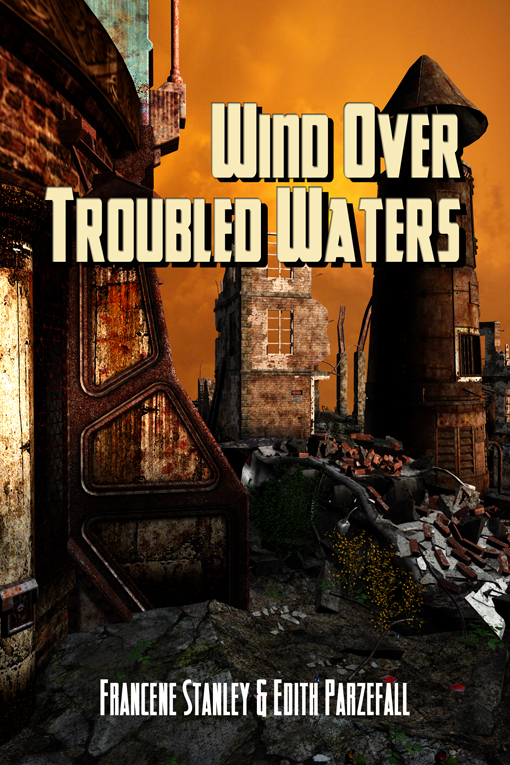
In the forth book in my futuristic Higher Ground novels co-written with Edith Parzefall, the travelling companions reach London where they come into contact with lepers living in an underground tube station. Here's an excerpt: ~~~Hasid stepped in front of him. “They are leeps. It's a horrible disease. They are everywhere, Boris. Let's get out of here. This is their place.”
“Listen to the man,” Aron said.
Boris swallowed, then nodded. Far too many grimy faces for him to count. He turned his back on the miserable lot and walked towards his friends. “Can't we do anything for them?” he whispered so only Eliza could hear him.
Tilting her head, she said, “I don't think anyone's tried yet. Dey look horrible, dey stink and die. When one's dead, dey put dem on da mound and take whatever da living can still use. Makes sense, don't it?”
She studied him with searching eyes.
“Don't people have respect in this place?” Boris grumbled.
“What's respect?”
He glanced over his shoulder at the grey figures now hobbling after them, hands stretched out. He remembered the scrap of food in his bag. “I'll show you.” He spun around and strode towards the grey people. Their putrid smell hit him again.
“Boris!” Eliza yelled. “Don't! Ya might catch it.”
Sorrow replaced the earlier horror in his heart as he neared the first grey figures. He blocked his nose against the smell. They'd stopped, hands reaching towards him.
“Bless you,” a woman whispered, her lips swollen and bruised. A boil on her cheek sickened Boris, but he couldn't look away.
“Can you give us something?” a man without teeth said.
Boris pulled the hard piece of stale bread from his bag. “You might have to soak this in water.”
“Bread,” the woman whispered.
The toothless man took the half loaf with trembling fingers.
The ugly boils on his bare arms reminded Boris of the dying man, eaten alive by maggots. He closed his eyes for a moment. ~~~
The title, Long Doom Calling is a twisted version of the song, London Calling. The book is due to be released around September. You can see the first three books on the right sidebar.
www.marionchonorscsj.com On the news this morning, experts suggest the menopause and its side effects can all be blamed on men.
First proposed in the 1950s, the grandmother hypothesis stated that menopause, which stops a female's fertility well before the end of her lifespan, may have evolved to benefit a social group. Grandmothers played an important a role in caring for offspring that were already born.
The grandmother effect suggests that women lose their fertility at an age where they might not live to see a child grow, and instead are available to care for younger women's children. The menopause was therefore seen as the block to older women from continuing to reproduce.
Using computer modeling, a research team concluded preferential mating was the evolutionary answer. Men of all ages chose younger women as partners. That meant older women didn't need to be fertile.
But a UK expert said that was the wrong way round and men chose younger women because older women were less fertile, which gave rise to menopause.
baaaaabyanimals.livejournal.com A grandmother effect link has been found in the behavior of whales and monkeys.
Scientists have discovered an evolutionary reason why humans and whales both have grandmothers. Scientists developed a mathematical model to study kinship dynamics in killer whales (orcas), short-finned pilot whales and humans. This revealed that, as post-menopausal females aged, they developed closer ties to infants.
www.macalester.edu This showed an underlying similarity between whales and great apes that might otherwise have been masked by the big differences in their social structures. Researchers said the analysis can help explain why, of all long-lived social mammals, it is specifically among great apes and toothed whales that menopause and post-reproductive helping have evolved.
In Japan, two grandmother monkeys have been seen intervening to raise their own grandchildren, providing essential care including suckling in one instance where the grandmother was young enough. The scientists who witnessed the actions say it is the first unambiguous example of such behavior shown by a non-human primate. The observations were made in a free-ranging group of Japanese macaques. The group has been studied since 1958, so scientists have kept a record of the birth date and blood relationships of each individual.
Once again, experts' opinions differ about the reason for menopause. Do men choose younger women because older ones are less fertile? Or does their betrayal induce menopause? Maybe Mother Nature has a good reason for grandmothers to help in caring for the young.
Here's something we can all utilize. A short walk after a meal is beneficial. To everything. Perhaps you'll hear birdsong or the trees swishing. The wind might brush your face. Any green growth you pass will rest your eyes.
But most of all, a new US study has shown that a 15 minute walk after a meal could cut the diabetes risk in older people. Elevated blood sugar after meals could increase the risk of type-2 diabetes, so resting after eating is the worst thing you can do. Post-meal walks control blood sugar as well as one long walk. The study was the first to test short bouts of exercise in the risky period following meals, when blood sugar can rise rapidly.
The important take-home message is that doing any physical activity, even at a low intensity, is good for you.
Older people may be particularly susceptible to poor blood sugar control after meals due to insulin resistance in the muscles and slow or low insulin secretion from the pancreas, the researchers said. They found the best time to walk was after the evening meal, which is often the largest of the day and therefore causes the greatest rise in blood sugar. www.open.edu Lately, I've felt cold after the evening meal, especially in the legs. I sit at my computer for an hour before retiring to the living room with my husband. Even though it's supposed to be summer, the temperatures are low. He's nice and warm, having cooked the meal and washed the dishes. I'm so cold I spread a blanket over my legs. Before you scoff that I'm lazy—I have a walking disability. An accident during a hip replacement shattered my femur, resulting in the bone being pinned and screwed onto a shaft. That should have worked, but it didn't. My leg is crooked and my walking is slow and painful. A rollator solves the problem outside. It's pretty funny when other walkers pass me by on my afternoon stroll. I'm like the tortoise plodding on as the hare bounds past on wings of youth.
Dah! I see it now. Perfectly logical. I needed exercise.
Now I have a dilemma. My schedule will need to change. I've always loved routine—more so since I've passed the 70 year threshold. Mind and body respond well when I anticipate what is to come.
Nothing for it, I must alter that habit and walk for my life. Apparently, three 15 minute walks are better than one 45 minute workout.
Do you know someone who could benefit from this advice?
'May you live a long and productive life'. This is considered the ideal. But, let's break it down. Do we really want to live a long time?
This morning, a news article featured the world's oldest man who died yesterday.
Officials in Japan have announced the death of the world's oldest person and the oldest man ever to have lived. He died of natural causes aged 116. Kimura was recognized by Guinness World Records as the world's oldest living person in December 2012, after a woman from the United States died at the age of 115. The centenarian had seven children, 14 grandchildren, 25 great-grand children and 15 great-great grandchildren, and worked at a post office for about 40 years. After retiring he took up farming which he continued to do until the age of 90. Positive and optimistic, he did not smoke and only ate until he was 80 percent full. His motto was, 'Eat light and live long'.
Back to 'May you live a long and productive life'. Live a productive life in what way? Loving your family? Keeping your immediate surroundings clean? Working at a job you don't really like for the sake of maintaining your life-style? Or doing something you really love long into your dotage? Of all of these, love is the most important. However, occupying your mind with an activity that brings joy must rate highly. The other day, a writer friend died after a long life. I'm not certain of her age, but I believe she'd lived over 100 yrs. Laurel Lamperd was happy and fully occupied with her writing. She maintained her blog site and made her last entry in May this year. Her Amazon author site lists seven published books. In this way, she kept up with the times while stimulating her mind. Her last published book on April 15th 2013 was Journey from Walara. I wrote this poem for Laurel on her last birthday in May.
blogs.telegraph.co.uk The age-old wrangle between immigrant gold miners and the government rises in Ghana again.
Ghana's police have arrested at least 55 West Africans suspected of illegal gold mining, an immigration spokesman has told the BBC. The authorities plan to deport the suspects. More than 200 Chinese workers would be repatriated after their arrest last week.
Ghanaian law prevents foreigners from working in small-scale gold mines. Ghana is Africa's biggest gold producer after South Africa. The raids are popular with many poor Ghanaians who feel that foreigners are taking jobs from them.
At least one of these companies is at loggerheads with the government over the deportations. The company insists that all its workers have valid permits, and alleges that members of the security forces have stolen goal during raids on its property this year.
www.goldnuggetsales.com People have fought over the world's most precious metal since recorded history. Major gold rushes took place in the 19th century in Australia, Brazil, Canada, South Africa, and the United States, while smaller gold rushes took place elsewhere.
The gold rush in Australia attracted adventurers from all around the world. The majority of these new arrivals were British but also included Americans, French, Italian, German, Polish and Hungarian exiles. The largest foreign contingent on the goldfields was the 40,000 Chinese who made their way to Australia.
commons.wikimedia.org In 1861, Chinese immigrants made up 3.3 per cent of the Australian population, the greatest it has ever been. These Chinese were nearly all men (38,337 men and only eleven women!) and most were under contract to Chinese and foreign businessmen. In exchange for their passage money, they worked on the goldfields until their debt was paid off. Most then returned to China.
Many years ago, I lived in Robe, South Australia. The house my family and I lived in was built mainly to cater to the Chinese migrants, who landed in the safe harbor there before they made the trek into Victoria to find gold, thus avoiding taxes. These poor workers bought biltong (dried meat) to carry with them. Back in the 1850's, the front room of the cottage served as a butcher shop. The living quarters at the rear consisted of a main room with a fireplace at one end and a kitchen. They used the 6ft round tank outside to tan hides.
I'm connected to those gold rush days. My great-grandmother worked in the kitchen at the local Robe Hotel at that time. Fate took my family back to the beautiful lobster-fishing town. Six degrees of separation is the theory that everyone and everything is six or fewer steps away, by way of introduction, from any other person in the world. I guess it could also be applied to events in history.
Do you have any stories about gold rush days?
A dog has been rescued 10 days after his critically injured owner was airlifted to hospital after a 150m (450ft) fall in Snowdonia, Wales. Spaniel type, Sutty, is believed to have been frightened off when a helicopter rescued his 60-year-old owner in the Ogwen Valley on 29 May.
www.ripleys.com After reading posters about the missing dag, two local people climbing on Atlantic Slabs heard a dog whimpering and found the uninjured dog on a ledge. More people arrived with additional ropes and they lowered the dog in a rucksack. Sutty had dug a little nest for himself and was in remarkably good condition although a little thin under his mat of fur. The team reunited the happy dog with the injured man's daughter although Sutty's owner remains in hospital near his home in Birmingham.
We read about so many dog rescues on the news. Canines have been man's companions throughout history. From wolf to dog—it's no accident that dogs evolved this way. Humans have been selectively breeding them for around 14,000 years to serve as laborer, companion, hunter, herder and warrior. Man and dog have developed a deep and lasting bond. Here are more news items.
yourlocaladda.com Yesterday: Eight dogs were rescued in the USA from a fire at an Ogden apartment Saturday morning, but firefighters contained the blaze to one room. Neither the pets nor their owners were injured in the blaze that is currently under investigation. On the same day in the UK, firefighters rescued three dogs after being called to a flat fire in Sherborne.
May 19, 2013 – A four-year-old dog had a lucky escape last night after chasing a rabbit and falling 10ft down an open mine shaft at Scorrier, near Redruth.
On Apr 26, – A blind dog had to be rescued from the cold waters of Lake Ontario in Canada after falling off a ferry dock.
In Mar 6, 2013 – A woman who fell from a cliff into the sea while trying to rescue her Cocker Spaniel said that a pod of dolphins saved her and her dog's life.
Jan 11, 2012 – A terrified dog was rescued by kayaker a mile from coast after fleeing hit-and-run car crash that killed its mother-of-three owner.
www.telegraph.co.uk In Jan, 2010, 50 firefighters were deployed to rescue one dog in Los Angeles. Capt. Steve Ruda said the risk involved with saving a German shepherd from the storm-swollen river was not as extravagant as it appeared. The US department has received praise for the hour-long rescue operation, but has also come under criticism for using so many resources.
Mr Ruda said there was no extra cost because the firefighters were on duty and stationed nearby.
A firefighter dangling from a helicopter grabbed the dog and held tight as they were taken to an overpass. The dog bit the firefighter, who lost a nail and fractured his thumb. The rescuer held no hard feelings toward the dog because time was too short to bond with the panicking dog before the rescue.
I remember every one of my dog friends and hope there's a special place in heaven where we can be reunited. Has a member of your family ever rescued your dog?
The BBC Food Programme suggests preparing food can help us cope with grief.
Of course, a bereaved person needs to get over the initial shock to face their life again. Nothing will replace the loved-one they lost. However, they can turn to cooking to bring back positive memories. Whether shopping, making the meal, or eating, each aspect of their involvement together can be seen in a positive or a negative way.
www.epicreads.com During the first stages of grief, food can seem unimportant. Sometimes, the pain of losing someone special can remove the pleasure of food, and leave people unmotivated to cook.
When my neighbor lost her husband after a short time with cancer, she retreated. Nothing would induce her to answer my knock. I slid notes through her door, telling her I would be there for her when she wanted to talk. Over the duration of two weeks, I offered her snippets of tasty food so she didn't need to cook and she spoke faltering words to express her pain. She lost a lot of weight. Her husband used to do the cooking.
The suggestion is that aromas from a special dish can bring back positive memories. The fragrance of cinnamon from a grandmother's favorite pudding might trigger recollections of a cooking lesson. The deep smell of a stew could induce happy thoughts of your mother's kitchen. Through food, we can remember all that was good about the departed loved-one.
Some hospices in England now run cookery courses to help relatives in the bereavement process. Some of them had started with no cooking skills at all, having lost a partner or parent who took on that role. But the course has helped them to embrace cooking and find enjoyment in life once again.
early thirty years ago, my appetite decreased when I separated from my husband. The pain was worse than the grief of losing a loved-one because I didn't know if I was doing the right thing.
My original decision would hurt my family and, most of all, my deeply depressed and disturbed husband of 27 years, who controlled and belittled me.
Okay, I know this is going to sound deranged, but I'll tell you anyway. I prayed for direction and received an affirmative answer. This powerful experience gave me the strength to carry on. I left my husband and suffered for nearly a year until we got back together again. Once more, I tried to make our marriage work with different rules. However, the union broke down when he chose my best friend, who supported him enough to seek help. Tests revealed his bipolar condition.
Once more, I plunged into grief. Food lost all importance and I became thinner than I'd ever been. Because I knew I would never be free, I left my home country of Australia and arrived in London. I didn't eat properly for another year until I met my present husband and began a new life. Now we're retired. He has taken over the cooking and prepares wonderful meals. I hate to contemplate a future without him. Would I try to recreate meals he'd cooked for me?
I'd love to hear your experiences with grief and how it affected your appetite. I'll bet you've got some stories to tell.
www.boliviabella.com Imagine being buried alive. This happened to a young man suspected of rape. Without a trial, he was covered with soil while alive by villagers in the southern highlands of Bolivia.
Police had identified the 17-year-old as the possible culprit in the rape and murder of a 35-year-old woman near the municipality of Colquechaca.
The chief prosecutor reports that more than 200 furious local people seized the man and buried him in the grave of his alleged victim. Residents blocked roads into the village to stop police arriving.
Apparently, a reporter for a local radio station would only speak anonymously for fear of reprisals. He told the media that mourners tied up the accused man and threw him into the open grave alongside the woman's coffin before covering them both with earth.
m.theglobeandmail.com About 5,000 inhabitants live in the town of Colquechaca, some 207 miles ( 333 km) south-east of the Bolivian capital, La Paz.
Correspondents say lynchings sometimes happen in isolated, poorer parts of Bolivia, where police and other authorities are scarce.
Prior to European colonization, the Andean region of Bolivia was a part of the Inca Empire, the largest state in Pre-Columbian America. The conquistadors took control of the region in the 16th century. During most of the Spanish colonial period, this territory was known as Upper Peru. An indigenous people of Bolivia, Peru and Chile, the Aymara have lived in the Andes for over 2000 years.
coca farmers - www.nadir.org They now tend coca plantations. The coca leaf, used to make cocaine, is classified as an illegal drug by international bodies.
According to Wikipedia, the Bolivian population, estimated at 10 million, is multiethnic, including Amerindians, Mestizos, Europeans, Asians and Africans. The main language spoken is Spanish, although the Guarani, Aymara and Quechua languages are also common and all four, as well as 34 other indigenous languages, are official. The large number of different cultures within Bolivia has contributed greatly to a wide diversity in fields such as art, cuisine, literature, and music.
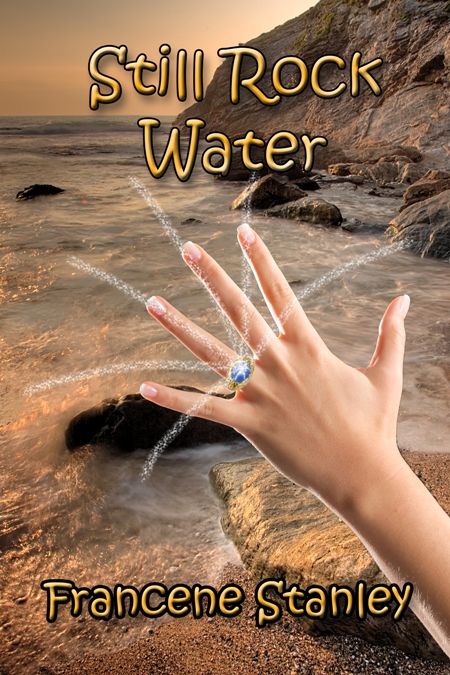
I've always been fascinated by the hunting music of the pan pipes. In my first book, Still Rock Water, the 16-year-old daughter tries to learn to play the pipes.
The video below is well worth listening to against the backdrop of Bolivia.
By their action, the people living in the tiny municipality of Colquechaca showed their belief in rough justice. Who is to say if their method of preventing future crime is right or wrong? Each one of the mourners would have understood the accused man's suffering and learned a vital lesson. Crime against women is punishable by death. This might not be our way—but it's theirs.
In Western society, a judge and jury must have irrefutable proof of a man's guilt. A man convicted of rape is liable to imprisonment for life or for any shorter term. Sometimes, he will be pampered in jail for a few months before he's released to prey on women again.
|