francene--blog. Year 2013
  • Home
  • Blog

January 31st

1/31/2013

 
For the next two weeks, I'll be involved in a blog tour with four other authors.

What? I'm going on a trip? Hold on there. What should I pack? Where are we going?

No, silly, it's just a game. We visit other sites and find out what the author's are doing and giving away as prizes for those who participate. Real prizes, not just books sent through the air to a satellite and back to another person's equipment. Maybe my understanding of how the book arrives is flawed, but that's a close as I can figure.

I wonder if many of us really consider what our technology does for us or how much we rely on communicating in a non-personal way.

Click here to see the full article. A quote from Devine Impact.

'True it takes a person to send the email, or send the text message but it lacks greatly. The missing element is that of human contact; the look in someone’s eye; the tone of one’s voice; the ability to pick up one another’s body language. Without these important factors that engage the heart as well as the mind, establishing the grounds for relationships that can stand the test of times are nearly impossible to achieve'.

Back in the 1940's when I was a child, I played in the shed, ran around in the street, or acted heroine roles in front of my sisters and friends. In the sixties, my children played at the park or dressed up in our home. The boys made up adventures for their kung-fu kicking Chinese figures with straw-stuffed limbs. The girls wove their Barbie dolls in and out of the action. Now days, many children sit in their houses alone, their only contact with outsiders through the internet.

We've all watched disaster movies. What would we do without our technology? When communication is lost between the leaders and the country's forces, people only survive through interpersonal skills and must rely on their basic ability and nature again. I'm hoping the authorities have a back-up plan.

I've written a draft of a novel set fifteen years ahead in time just before the onset of a comet hit. I'd hate to think it could really happen—or how we would cope.


January 30th

1/30/2013

 
Cats are killing wildlife in the billions.

Cats are one of the top threats to US wildlife, a study suggests. The authors estimate feral cats are responsible for the deaths of between 1.4 and 3.7 billion birds and 6.9-20.7 billion mammals annually.

Birds native to the US, such as the American Robin, were most at risk, and mice, shrews, voles, squirrels and rabbits were the mammals most likely to be killed.

Picture
Freeimages.com
I love cats—furry, cute, adorable cats. House cats. My first Siamese, Simba used to stand on my foot, look up into my eyes and give a low yowl. I'd bend down to stroke him as we connected. Sometimes, he'd tenderly clamp onto my leg, all the while expressing love. I remember the fuzzy feeling to this day.

Although stray, feral and farm cats, are responsible for the bulk of the deaths, domestic cats play a part too. The study suggests that a properly fitted collar with a bell will give their prey more warning.

The domestic cat's killer instinct has been well documented on many islands around the world. Felines accompanying their human companions have gone on to decimate local wildlife, and they have been blamed for the global extinction of 33 species.

A parasite carried in cat's feces is even killing sea otters when the hard casing is washed out through the waterways. The danger has been noted already for expectant mothers, who become infected while changing cat litter.

To act more responsibly, we should keep out cats indoors. That way, we reduce the chance of them being infected by eating contaminated birds or rodents.

My darling Siamese, Simba, died a lonely death in the fields close to our home when I lived in Robe, South Australia. He went missing one day, back in the 1970's. Our family of five searched for days. On the forth day, one of the children came running home to tell us he'd found Simba hidden in long grass under a tree. We took the comatose cat to the vet, but he died of dehydration and the poison from a grass snake. Must have been hunting. Wildlife had the last word.


January 29th

1/29/2013

 
Listen to Bob Dylan's song Blowin in the Wind.

'How many deaths will it take to be told that too many people have died?'

Over the centuries, disability has been hidden. The blind ninety-year-old Dandolo breached the walls of Constantinople. Paralyzed from the waist down, wheelchair-bound Roosevelt stood propped up for public pictures. The one-armed Nelson won the Battle of Trafalgar. Each were so successful, they couldn't be classed as disabled.

English history forgot one hundred poor souls, who probably never made it to the battle between Oliver Cromwell and his Roundhead cavalry, who went on to defeat King Charles 1's at the Battle of Marston Moor in 1644.

Picture
Recently found in mass graves at a ruined York church, 113 skeletons were arranged neatly in parallel rows, mostly laid on their side or face down in the dirt. No buckles, buttons or jewellery were found, indicating they were probably buried naked.  Given the probable 17th century date, it is likely that they relate to the largest battle in the Civil War.

Evidence suggests that the bodies could well have been Cromwell's soldiers who died from disease while laying siege to the city. Although the Royalist army was well-provided for behind the city walls, the besieging Parliamentary forces suffered severe deprivation, making them susceptible to illness and diseases such as dysentery and typhoid. Most of the skeletons had old broken bones and signs of past infection. Back then, they wrapped a wound with honey and oats as an antibiotic.

There was no such thing as disability in those days. People were just who they were. They got on with life as best they could and probably banded together for mutual support. Army life would have offered them a living, where they could do ancillary jobs like guarding the ammunition or working in the kitchens.

I'm too soft to have survived during those times. Perhaps we should try harder to manage unaided—those of us who can.


January 28th

1/28/2013

 
Perhaps there is a deeper level of consciousness in some animals than we realize. Although they don't speak to us with words, their eyes express their intelligence, sympathy and love.

I read about dolphins in one of Edgar Cayce's books. Over many years, the sleeping psychic discovered otherworldly layers. The uneducated simple farmer spoke about things beyond his understanding. One thing caught my attention from his recorded words: when the inhabitants of Atlantis blew their island out of existence through the power of their minds, they chose to return to the physical life on Earth in the form of dolphins. Since reading that, I've regarded the sea mammals with awakened interest.

Picture
BBC News
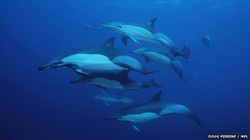
In the BBC Nature news today: Five individual common dolphins have been seen gathering to aid a dying companion. They formed a raft with their bodies in an attempt to keep the stricken dolphin afloat and help it breathe.

Korean-based scientists witnessed the event in the East Sea off the coast of Ulsan, in South Korea. This is the first time that a group of dolphins has been recorded trying to help or save another dying dolphin. Before, observers noticed individual mothers supporting dead or stillborn calves at the surface.

During a later trip, the Korean researchers observed twelve individuals swimming very slowly. Though it could move and splash its tail, its flippers appeared to be paralysed and it had red marks on its belly. A number of dolphins circled this group, while those within appeared to be trying to help the stricken dolphin maintain its balance, by pushing it from the side and below. The 10 remaining dolphins took turns to form a raft using their bodies. When the stricken dolphin appeared to die, the others continued to assist its vertical body.

Although I'm steady in my acceptance of the Creator's love, I don't know what happens when we die. Some say that people cling to religion or belief to give them something to look forward to rather than face their demise with fear. No matter what we believe, the future will reveal itself at the allotted time.


January 27th

1/27/2013

 
Here in Elstree, England, overnight rain has cleared the thick snow covering the ground, the temperature has risen from zero to 10 degrees Celsius (50 degrees Fahrenheit), and the sun brightens the landscape. However, on reading the BBC news today, my attitude isn't so bright.

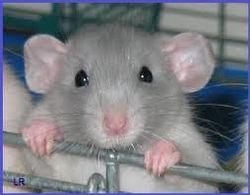
A study on rats has shown that exposure to certain chemicals during pregnancy affects not only the fetus, but generations to come. In the news report: The work implicates a class of chemicals found in certain plastics, as well as one found in jet fuel.

Picture
blindloop.com
Chemicals again. We know plastics are harmful to health, yet businesses go on manufacturing and using them to wrap our food as well as a million other purposes. Jet fuel must spray out of airplanes and affect us in the air we breathe and the food we eat. No escape.

'The idea of "epigenetics" - that parents do not just pass their genes to their children, but subtle differences in the way those genes operate - is one of the fastest growing areas of scientific study. Rats exposed to phthalates had offspring with higher rates of kidney and prostate disease, and their great-grandchildren had more disease of the testicles, ovaries and obesity'.

Maybe an overweight person can blame their grandparents for their condition.

Dr Skinner said: "Your great-grandmother's exposures during pregnancy may cause disease in you, while you had no exposure. This is the first study to show the epigenetic transgenerational inheritance of disease such as obesity." The study stresses that the tests were in no way conclusive and would not be conducted on humans.

Can we justify experimentation on animals? We know rats are highly intelligent animals. Some people even keep them as pets, like Ben. I find the whole subject of causing harm to animals repugnant. Will humankind ever stop their interference?

Is it worthwhile for a few creatures to suffer to benefit others?

The same case could be argued for servicemen who suffer or die during war.


January 26th

1/26/2013

 
Picture
Cape Passaro. ja.wikipedia
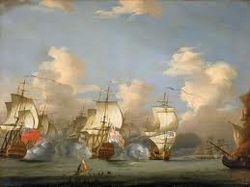
The exciting news about the finding of 300 year-old cannon believed to be from the Battle of Passaro in 1718 rouses thoughts of treasure. Five large cannon were found off the coast of Sicily, at the tip of Italy. However, this instance isn't about buccaneers but rather a desperate battle involved more than 60 ships which ended in defeat for the Spanish.

The cannon, which were barely covered by sand, were brought up and cleaned. The condition was so good that in parts the metal gleamed. The divers found the partial word LONDO on the handle of a piece of cutlery, decorated with what looked like a rose, nearby.

British fleet under Sir George Byng defeated a Spanish fleet, destroying or capturing seventeen Spanish warships. They were intent on driving the Spanish out of Sicily. Britain was not yet at war with Spain but was already committed to supporting the ambitions in southern Italy of the Emperor Charles VI.

Politics at work—the same now as then. In the latest news, countries are sending more men, equipment and aid to Syria. The U.K. has just agreed to gift them £21 million in funds.

Although Syria is in a desperate plight, I'd rather look after the poor in our own country than pledge resources we can little afford to another. If we each cared for those around us, the world would be a better place. The ripples would spread and link around the globe.

Human nature being the way it is, I don't think that will happen any time soon.


January 25th

1/25/2013

 
An interview question, and my answer, triggered a series of thoughts on the different aspects of love. When asked why I write paranormal romance, I replied:

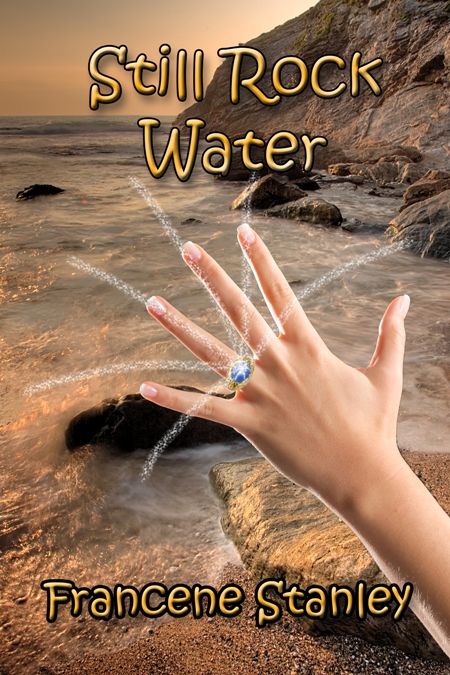
I write about visions, concepts and things we cannot see, yet know exist: kindness, understanding and a sense of fate. Love is the most basic and important of all human emotions. Love, in all its forms, is part of every story. In Still Rock Water, Liliha seeks romance after losing everything—her home, her children and her marriage.

During the early hours, I remembered my departed loved ones. I love all three and don't believe their essence is gone. Thoughts of my mother generate a feeling of devotion. She lived a hard life and maybe wasn't strong enough to fight for herself in her youth—a trait she overcame a little too late before althimers claimed her mind. I send her peace and healing. My first-born son, who grew to be a man of giant proportions, knew what he wanted and followed his own drum. I send him understanding. His sister, a gentle soul, became ill after he died and wasted away fifteen years later. I send her peace and the strength of my love.

Love takes so many different forms. Each direction love takes is of great consequence. Love is all. The pathos expressed in the song: She expresses love for an individual in all their unique traits.

I don't mourn my loved ones' lives. I celebrate having known them and hope to up meet again. We don't know what happens after we die. Science says nothing, religion says a heavenly state. I know which one I prefer to believe.

January 24th

1/24/2013

 
Today, I'm thinking of the song, I Don't Wanna Talk About It and the memories the tune and words bring back. First let me set the scene of what was happening around the world at the time.

In 1975:

·         The Vietnam War ended,

·         The British Conservative Party chooses its first woman leader, Margaret Thatcher,

·         US Apollo and Soviet Soyuz 9 spacecraft link up in space and Russian cosmonauts and American astronauts shake hands,

·         BIC launches first disposable razor.

In the early 70's, my former husband and I took our three children around Australia in a caravan, looking for a better way of life. When we returned, we bought the house we'd left behind in Robe, South Australia and settled down. He built up a small building business and I ran a craft shop. By the mid seventies, we'd converted the craft shop to a tea room and I baked cakes in the wood stove and grew wonderful vegetables. Our back to the earth lifestyle included raising different types of fowl, geese and ducks and a small flock of colored sheep in the field beside the house. I spun the wool to use for knitting and weaving.

Meanwhile, in 1975, Rod Steward released I Don't Wanna Talk About It. I hid my feelings too. My husband became increasingly obnoxious and I went into denial mode. I'd made a vow to him and wanted to honor my commitment. Yet, he made me desperately unhappy. Rod Steward's song spoke to my heart.

The world has changed drastically since then. I've moved to England and remarried. Some of you weren't even around in that decade.

I'd love to hear if you ever lived a different way than you do now.

January 23rd

1/23/2013

 
Nobody wants to face this problem, least of all me, but it appeared on the Yahoo news this morning and I decided to write about it. Sir David Attenborough says that humans are "a plague on earth". The 86-year-old broadcaster said the negative effects of climate change and population growth would cause disaster within next 50 years.

He told the Radio Times: "It's not just climate change. It's sheer space, places to grow food for this enormous horde. Either we limit our population growth or the natural world will do it for us, and the natural world is doing it for us right now."

Are we 'meant to be here', as quoted in the Desiderata. If so, should the human race go on expanding until it takes over the rest of the natural world? China's policy of cutting the population by limiting the number of children per family showed common sense. They are about to revise that rule. I'm not sure why. Maybe it's because the nation is now wealthy.

Sir David Attenborough says, "Until humanity manages to sort itself out and get a co-ordinated view about the planet, it's (hunger in Ethiopia) going to get worse and worse."

Plague from the Encarta dictionary: ...spreads rapidly through the population, killing a great many people.  ... an affliction or extremely troublesome thing.

From the bible:  And you, be ye fruitful, and multiply; bring forth abundantly in the earth, and multiply therein. - King James Bible "Authorized Version", Pure Cambridge Edition.

English standard version: Then God said, “Let us make man in our image, after our likeness. And let them have dominion over the fish of the sea and over the birds of the heavens and over the livestock and over all the earth and over every creeping thing that creeps on the earth.”

Maybe it's all about balance. If man has dominion over the other creatures, shouldn't we care for them as well as our brothers and sisters? How can an ordinary aging woman influence events worldwide? Perhaps thoughts will have an impact.

January 22nd

1/22/2013

 
Mother Nature has a way of controlling every living thing. It's hard to say if each organism has a right to be here. I guess it depends on your point of view. I can't believe cancer cells are equal in importance to a giant tree. Be that as it may, the great psychic healer, Edgar Cayce said that there is something in nature to cure every ill—referring to the human body. For instance, he suggested eating a slice of pineapple every day to control diabetes. I have no idea if it works, so don't try this at home.

Released from the technology section of the BBC News this morning, I read about the use of wasps to control crop pests. A number of farmers in Brazil have swapped chemicals for wasps, in a country that has recently outgrown the US as the largest consumer of pesticides. "Egg-spraying" from a plane is just a trial - at the moment, the wasps' eggs are put on pieces of cardboard and distributed throughout the fields of sugar cane.

In my youth spent in Australia, I remember scientists released myxomatosis in mosquitoes to control the rabbit plague. The poor creatures suffered a painful death. Recently, the boffins looked into using radiation to sterilise fruit flies, a pest in many places. Researchers at Oxitec, a spin-off from Oxford University, have done it recently to mosquitoes, genetically modifying them to fight the insects destroying trees.

Also, in 1935 cane toads were taken to Australia from South America to fight the cane beetle - an insect harmful to sugarcane crops. But since the toads can consume almost anything, their population exploded, quickly reaching more than 200 million and harming local wildlife. "That was an act of insanity, really, against all of the scientific knowledge at the time," says Dr Shaw.

Mankind can't help tampering with nature. What do ordinary people do in their own environment? Maybe we shouldn't use pesticides on our garden plants and chemicals to wash our hair. Could we ever go back?

<<Previous

    Author

    Francene Stanley, author of many published novels. If you like my writing, why not consider purchasing one of my books? You'll see them on the sidebar below.
    Born in Australia, I moved to Britain half way through my long life.

    Picture

    Archives

    December 2013
    November 2013
    October 2013
    September 2013
    August 2013
    July 2013
    June 2013
    May 2013
    April 2013
    March 2013
    February 2013
    January 2013

    RSS Feed

    Categories

    All
    Catastrophe
    Creativity
    Family
    Life Experiences
    Mother
    News
    Novel Writing
    Novel-writing
    Retirement
    World

    Picture
    Picture
    Picture
    Picture
    Picture
    Picture
Powered by Create your own unique website with customizable templates.
Photo used under Creative Commons from Parker Knight