francene--blog. Year 2013
  • Home
  • Blog

April 30th

4/30/2013

 
Picture
www.switched.com
In the news today, the UK government rules that male prisoners in England and Wales work harder for privileges such as TVs in cells.

What? To me, prison seems to be like some sort of holiday, where prisoners can rest between bouts of crime in their normal life.

Other changes to the Incentives and Earned Privileges schemes will include:


·         A longer working day for prisoners

·         A ban on films with an 18 certificate

·         Extra gym time being dependent "on active engagement with rehabilitation"

·         Restricted privileges, including access to private cash, for prisoners in the first two weeks of their sentence. They must also wear uniform at entry level

·         Prisoners then put on either basic or standard "IEP level" depending on how they "co-operate with the regime or engage in rehabilitation"

·         Those on basic level no longer allowed TVs in cells


Picture
betterworld.blog.co.uk
Why do people who have acted against our society have a life of ease—fed and housed in comfort, while other people struggle for their existence?

There's more: A BBC home affairs correspondent has reported that police are encouraged to deal with minor incidents in an informal way to reduce the burden on the criminal justice system. Offenders who admit to serious and violent crimes, including knife crime, domestic violence, and serious assault, are let off with no criminal record, no justice and not even a caution.

As part of this approach, known as a community resolution, or restorative justice, the offender apologizes to the victim, pays compensation or repairs any damage caused, and is given advice about his or her behavior.

Picture
www.telegraph.co.uk
Unlike a caution, a community resolution does not lead to a criminal record.

Police guidelines state: community resolutions should be used for less serious offences which may include minor assaults without injury.

Something is very wrong here in the UK. Criminals are given preferential treatment, while citizens who have always obeyed the law and contributed to society are left to struggle. I like England. I arrived to work in this land of opportunities, seeking refuge from a disastrous first marriage in Australia. But the government seems to be bending backward to give opportunities to all. Some call it the nanny state. But nannies hand out rules and insist on children conforming. Their young charges don't want to be sent to the naughty corner, which represents restriction and alienation. Why don't prisons fulfill the same role?

Does the prison system work near you?


April 29th

4/29/2013

 
Picture
www.oocities.org
Was King Arthur real?

A medieval chronicle from 1136 popularizing the story of King Arthur is thought to have been written in a lost Oxford chapel by a Welsh scholar.

Researchers now believe Geoffrey of Monmouth's The History of the Kings of Britain was penned at St George's chapel, before it was demolished to make way for Oxford Castle. All that is left of the building is the Saxon stone-built St George's Tower and the ancient crypt.

The serving Cannon, Geoffrey, introduced the figures of King Arthur and Merlin to a wide medieval readership and paved the way for the enormous popularity of the Arthurian legends in later centuries, right up to modern times. Based on Geoffrey's secret Welsh manuscript, the story told of Guinevere, Merlin, the sword later called Excalibur, and Arthur's final resting place in Avalon.


Picture
operaqueen.tumblr.com
Opinions differ about the reality of King Arthur. The mythical figure about the 5th Century military commander, leading the Britons into battle against the invading Saxons, has proved impossible for historians to verify. The only contemporary source, The Ruin and Conquest of Britain by the British monk and historian Gildas (c.500-70), does not mention Arthur at all.

Some scholars have suggested that a Romano-British war hero described by the 6th Century historian Gildas, may have been the real Arthur. Others say a 2nd or 3rd Century Roman military commander, may have formed the basis of the Arthurian myth.

However, some historians believe Arthur was an amalgam of heroic figures from Celtic mythology.


Picture
www.tripadvisor.co.uk
Over thirty movies have been made of Kink Arthur's life. Indiana Jones was confronted by Arthur's mythology in his third big-screen encounter, while John Boorman's 1981 fantasy Excalibur and Robert Bresson's 1972 film Lancelot also re-imagined the saga. Perhaps most memorable of all, however was 1975's Monty Python and the Holy Grail, with its less than reverent take on the story--strange women lying in ponds distributing swords is no basis for a system of government.

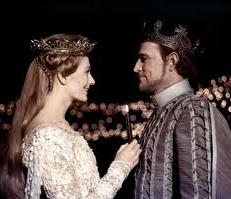
My favorite was the 1967 musical Camelot, with Richard Harris and Vanessa Redgrave filmed in the fields opposite my home, where it only rains at night according to one song.

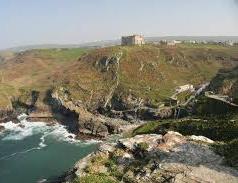
I've made references to King Arthur and Tintagel Castle into several of my books set in Cornwall—even the futuristic ones. The story of love and conflict and betrayal is compelling. The 1,500 year-old tale incorporates romance, heroism, chivalry, honor and, of course, the promise that the hero will return to rescue his people.


April 28th

4/28/2013

 
Picture
www.stamfordadvocate.com
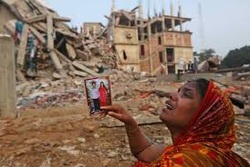
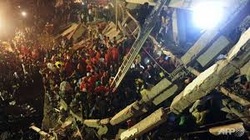
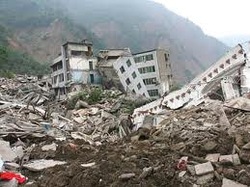
After five days, rescuers are frantically trying to save about nine people located in the wreckage of a collapsed building in the Bangladeshi capital Dhaka. Bangladesh has one of the largest garment industries in the world, providing cheap clothing for major Western retailers that benefit from its widespread low-cost labor.

Teams were using light cutting equipment to try to reach the trapped men, whose weakening cries drift up from below. Search teams are dropping water and food through gaps in the rubble. Rescuers are digging tunnels through the rubble with bare hands, drills and shovels because they fear heavier equipment could cause further collapse. With the smell of decomposing bodies making some rescuers ill, time is running out before officials bring in heavy machinery.
Twenty-nine people were rescued on Saturday and two engineers were arrested, but the building's owner is still missing. The engineers were alleged to have approved the building's safety a day before it came down. Police said they had ordered an evacuation of the building on Tuesday after cracks appeared in the structure on Tuesday. The factories ignored instructions and operated the next day. The owners of three of the five clothing factories inside face preliminary charges of causing death by negligence.


Picture
www.dispatch.com
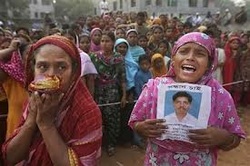
Police said that 353 bodies had so far been found, 301 of which had been identified. A further 2,431 people are known to have survived. There is no official figure on the number of people still missing.

The collapse of Rana Plaza, the eight-storey building which housed five garment factories, is not the first incident of its kind. Back in 2005, a similar building collapsed in the same town, leaving 64 garments workers dead. The factory owner was arrested but did not serve any time in prison.

Since then, there have been fires, stampedes and other incidents at various garment factories, causing hundreds of deaths. Most recently, more than 100 workers perished in a fire at a township close to Dhaka where hundreds of factories are located. In most of the incidents, the deaths were preventable. Often, workers could not escape because exits were locked.


Picture
blogs.state.gov
However, millions of young girls from poor families have found jobs in this industry, helping them to break out of a life of dependency and grinding poverty.

Lessons must be learned from the most recent catastrophe. These workers must never be subjected to danger again while they go about their business. Let us hope the people will return to their celebration of life and parade the streets dressed in colorful garments with joyous, smiling masks once more.

Here in my study, brilliant morning sun pierces the window, forecasting a beautiful spring day. Young horses gallop from one enclosure to another over fields that stretch up a gentle slope to a distant graveyard, where citizens lie untroubled. In the peace and safety of Hertfordshire, England, my heartfelt sympathy goes out to all those affected.


April 27th

4/27/2013

 
Picture
www.designboom.com
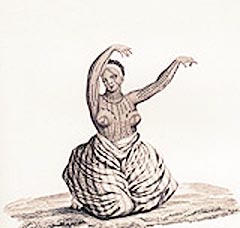
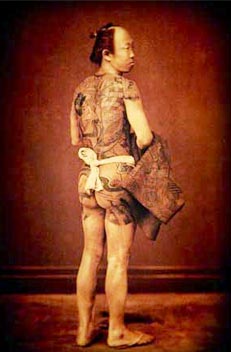
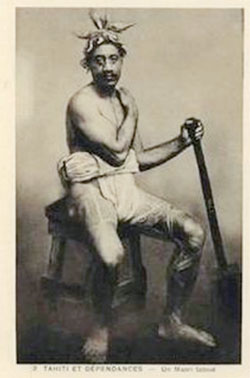
Each person on earth is an individual and every culture favors certain styles of dress of appearance. Now days, Pygmies in New Guinea, the Maori of New Zealand, and the Polynesians all use tribal tattoos. The history of tattoo began over 5000 years ago and is as diverse as the people who wear them.


Picture
www.designboom.com
Tattoos are created by inserting colored materials beneath the skins surface. The first tattoos were probably created by accident. Someone had a small wound, and rubbed it with a hand that was dirty with soot and ashes from the fire. Once the wound had healed, the mark stayed permanently.

Not many records remain. Otzi the Ice Man from the bronze age created a sensation when his headless body containing 57 tattoos was found. Tattooed mummies from the Pazyryk culture 2,400 years ago were found in Russia. Ancient Egypt, Japan, China and Samoa all spread the practice.

However, in our enlightened are, I fail to see the beauty in marking or piercing the body we were born with. Same goes for augmentation of breasts or lips, and any of the other body altering fads.


Picture
www.designboom.com
People are now putting themselves in danger by using illegal unlicensed tattooists. The UK health authorities have issued a strong warning about the possibility of contracting HIV and hepatitis from untrained operators, who are more likely to use substandard equipment and conduct inadequate sterilization techniques. People who take the risk could end up with a disfigurement or life-changing health condition. At the very least, anyone who is thinking of having a tattoo should do their research and use a registered tattooist.

Have the young customers ever thought about how they will look in the future? Fashions change so quickly. What's hot today will be scorned tomorrow. The worst of the situation is: you can't change your skin. As if it's not bad enough for it to sag with age, the designs will crease and fold in unattractive ways.

We can wear our hair many different ways, or even change it's color. Our individuality can be expressed in our style of dress, the way we walk and our attitude. I wouldn't want to crush anybody's freedom of choice. But, I would like to advise caution—and safety.

How do you feel about tattoos?


April 26th

4/26/2013

 
Picture
www.dlsuworlds.com
While I slept in my little corner of the world, problems, catastrophes, and puzzles went on. I awoke to discover the US suspects Syria of using chemical warfare against its own people, a hospital fire in Russia trapped bed-prone mentally ill residents behind closed bars, the death toll rises as more people are being dug out of the rubble under the collapsed industrial building in Bangladeshi, and in England, a nuclear submarine fire caused a quick evacuation before the Royal Navy crew extinguished the small welding blaze.

In this era of instant news, we're never out of touch with what goes on in other parts of the world.

But do we pay enough attention to events close at hand?

An ambulance removed my reclusive elderly neighbor from his flat last week. He was unable to care for himself and had suffered another decline in his breathing. I can't help wondering if the same fate awaits my when I'm old and alone.

Nobody wants to think of their own demise. I'd say I have about 15 years left. My parents and grandparents lived into their mid 80's. I've got plenty to occupy my mind, so I won't die of boredom. One writer cyber-friend on the other side of the world has just celebrated her 105th birthday. This leads me to believe that novel writing keeps the brain cells active and develops new ones, essential for averting dementia.


Picture
www.fanpop.com
During the night, the weather changed from sunny, almost hot conditions here in England to chilly temperatures and rain this morning. My bones ached well before I woke. How do bones know what's happening outside the sheltered environment of the home?

Nature keeps us attuned to our present circumstances. We are not our body, which will wither and die. We are the spirit inside.

Edgar Cayce, the legendary seer, advised using our latter years for learning new things to prepare for the next life. He also said,

' Secret, private, alone and separate are active words in our vocabulary. In the higher realms of consciousness there is no space. ... Things and people are not separate, but part of a Whole. ... By increasing the focus on self, we have created the illusion of a self separated from the rest of life, but it just isn't so. Our individual actions and thoughts make an impact on the Mind of the Universal One'.

Therefore, we are connected to everything that goes on in the rest of the world. Not through the internet, although that's a good example, but through the mind.

I'd like to believe that by caring about what happens to people buried alive under rubble, I am, in fact, helping them. Or am I living in a fairy tale?


April 25th

4/25/2013

 
Picture
Desire for cheap prices causes another catastrophe.

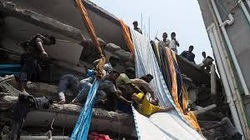
In the early news, a report tells of a frantic search for survivors under way at a building outside the Bangladeshi capital, Dhaka, which collapsed on Wednesday morning, killing at least 96 people. After the worst disaster in Bangladesh's industrial history, casualties are still rising. Tens of thousands of weeping family members are gathered at the site. Apparently, over 2,000 people were inside the building, which collapsed like a pancake within minutes. Local hospitals were overwhelmed with more than 1,000 people injured. Read the full story here.

Police said the factory owners had ignored warnings not to allow their workers into the building after cracks were noticed on Tuesday. The cracks even attracted the interest of local news stations, prompting questions over Bangladesh's chronically poor safety standards.


Picture
Bangladesh has one of the largest garment industries in the world, providing cheap clothing for major Western retailers which benefit from its widespread low-cost labor. Clothing supply firms from Canada, USA, around Europe, and the UK, used the businesses inside the building. In a highly competitive market, pressure from retailers to keep costs down was in part responsible for unsafe conditions.

Lengths of textile that were earlier being cut into garments—many destined for Western consumers—were now being used as makeshift slides to evacuate survivors and corpses. The owners of the factory are now said to have gone into hiding.

If Western companies really want safety standards to improve, they need to pay higher prices.

In these times of rising prices, it is hard to accept increased costs. One more thing could tilt the balance for struggling families. Here's the question we should all face: Do we care enough about these poor Bangladeshi workers, who only want to earn enough money to keep their family fed, to put our hand in our pocket and bring out more cash for our clothing?


Picture

April 24th

4/24/2013

 
Picture
www.belgraviacentre.com
Experts say cosmetic procedures like an injection to plump up the skin are a disaster waiting to happen. The UK Department of Health warned that dermal fillers, covered by the same level of regulation as toothbrushes, could cause lasting harm and should be available only with a prescription. The biggest growth is in non-surgical procedures such as fillers to tackle wrinkles, Botox and laser hair removal - the area the report describes as almost entirely unregulated. Anyone can give anyone else a treatment. See the full story here.


Picture
www.iris.edu
However, it gets worse. Another set of experts claim that human technology could cause the extinction of the human race. Not a cosmic hit, not a volcano eruption in Greenland, a pandemic. Nuclear war might cause appalling destruction, but enough individuals could survive to allow the species to continue.

As a species, we've already outlasted many thousands of years of disease, famine, flood, predators, persecution, earthquakes and environmental change. So the odds remain in our favor.

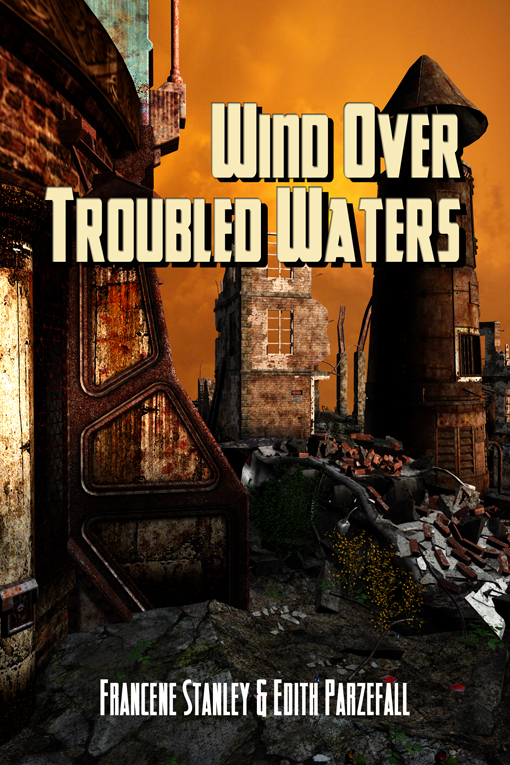
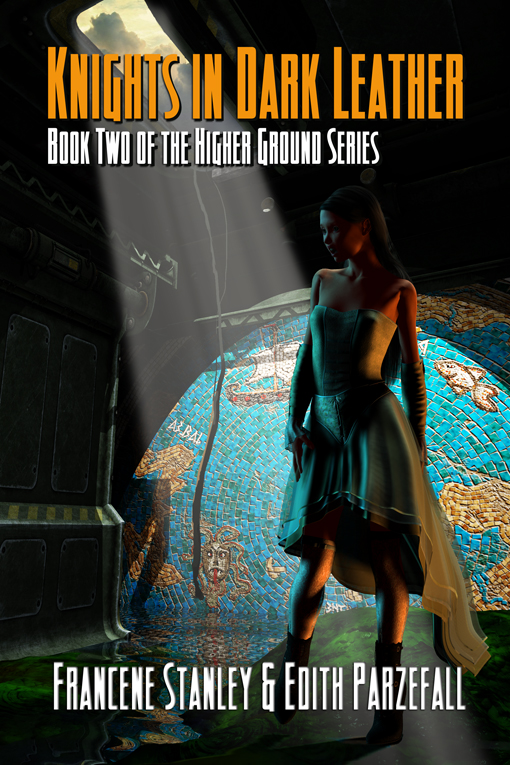
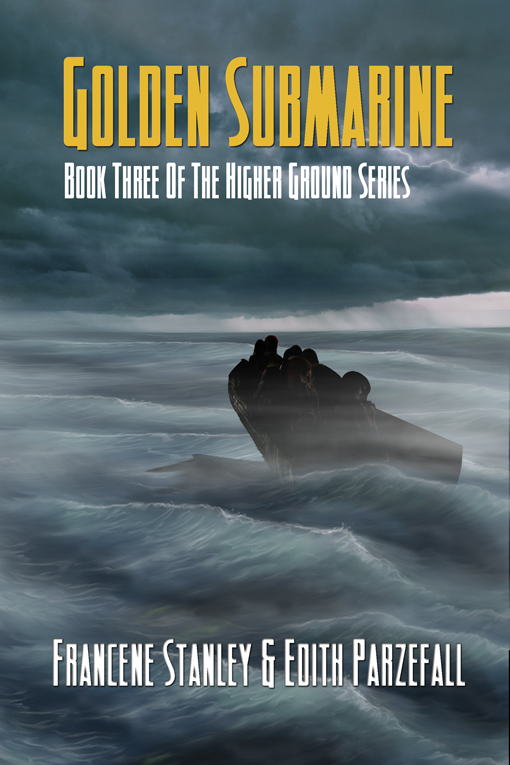
The Higher Ground series of post-apocalyptic novels I co-wrote with Edith Parzefall shows how a group of survivors cope with the environment after civilization is destroyed.

But that hasn't happened yet.

Right now, an international team of scientists, mathematicians and philosophers at Oxford University's Future of Humanity Institute is investigating the biggest dangers. Dr Bostrom believes we've entered a new kind of technological era with the capacity to threaten our future as never before. These are threats we have no track record of surviving.

Experiments in areas such as synthetic biology, nanotechnology and machine intelligence are hurtling forward into the territory of the unintended and unpredictable. Although synthetic biology promises great medical benefits, unforeseen consequences could come from manipulating the boundaries.

As well as the use of destructive nanotechnology in warfare, there are also fears about how artificial or machine intelligence interact with the external world. See the full story here.

Such computer-driven intelligence might be a powerful tool in industry, medicine, agriculture or managing the economy. However, computers could create more and more powerful generations of computers.

The potential of building things that could go wrong or outgrow our mentality at a frightening speed, fills me with horror. My novels' band of adventurers refer to the artifacts Tech sheens—like the round, shiny disc reflecting rainbow colors they find buried in the dirt. "Tech sheens didn't do people much good in the before times."


April 23rd

4/23/2013

 
Picture
en.wikipedia.org
I still don't know whether to believe in them or not, but I have dreamed in strange ways several times. Those dreams have predicted the future. I don't think they jump-started a change in my live—they were too weird. It's only afterwards that I saw the significant message. This is how it all happened.

After my 27-year support to a needy man, my marriage came under so much pressure that I knew I would crack if I remained. I experienced one dream during the time when I questioned the morality of breaking my vow and saving myself. I guess, my emotional state pushed the dreams to the forefront of my mind and gave me total recall.

One fateful night, I sank into slumber.

Wearing a red cape, I walked with a slow measured pace past round dwellings made of shaggy hide and twigs. People went about their daily chores without noticing my proud bearing. When I reached the coast, I stood on the sand. From the sea, three unrecognizable beasts emerged and came toward me. I stood unflinching until the dream dissolved.


Picture
www.tribulation.com
The memory is burned into my mind thirty years later.

Now, after following ancient history with a passion, I know that similar Celtic dwellings were made by early man in Britain. I think the three beasts might represent those from the bible, Revelation 13. The fact that they didn't frighten me showed I could be brave when standing alone.

About five years after that, I made the decision to leave Australia and find a job in England. I knew nobody in the country, but my grandparents had lived there. First, I had to face my fear of leaving loved-ones behind and coping alone. I made the move and have since remarried and live a happy life.

What important dreams can you remember?  Have any come true?


April 22nd

4/22/2013

 
Picture
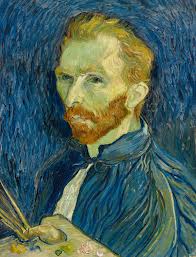
After twenty years of intense study over notes, biographical authors claim Van Gogh did not kill himself. Steven Naifeh and Gregory White Smith say that, contrary to popular belief, it was more likely he was shot accidentally by two boys he knew who had a malfunctioning gun. The authors came to their conclusion after 10 years of study with more than 20 translators and researchers.

Thousands of previously untranslated letters written by the artist were among documents studied by the authors to create a research database containing 28,000 notes.

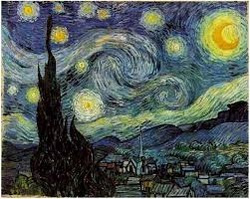
Van Gogh died in Auvers-sur-Oise, France, in 1890 aged 37. The Dutch master had been staying at the Auberge Ravoux inn from where he would walk to local wheat fields to paint.

It has long been thought that he shot himself before returning to the inn where he later died. However, it appears that he deliberately took the blame for two brothers, who were known to go drinking with him. One of the brothers liked to play cowboy with his manufactured gun. The accepted understanding of what happened in Auvers among the people who knew him was that he was killed accidentally and he decided to protect the brothers by accepting the blame. The reason being: he wanted to die.


Picture
The author said that renowned art historian John Rewald had recorded that version of events when he visited Auvers in the 1930s. Other details were found that corroborated the theory. They include the assertion that the bullet entered Van Gogh's upper abdomen from an oblique angle, and not straight on as might be expected from a suicide.

His acceptance of the blame could have been done as an act of love for his brother Theo, for whom he was a burden. Van Gogh's paintings weren't selling well at the time.

Other revelations claimed by the authors include:

1.       Van Gogh's family tried to commit him to a mental asylum long before his voluntary confinement later

2.        Van Gogh fought so furiously with his parson father that some of his family accused him of killing him

3.       Van Gogh's affliction, viewed as a mix of mania and depression, was a result of a form of epilepsy

The biography, Van Gogh: The Life, published on Monday, will give a greater understanding of a frail and flawed man and his art should be considered even more of an achievement.

For twenty seven years, I lived with an undiagnosed bipolar man. My brilliant first husband's highs were a wonder to see, but his depressions got worse and worse, ultimately leading to threats of suicide. I couldn't help him. He is now under treatment, which, after 25 years, doesn't seem to be helping.

If you were gifted, how would you cope with such a debilitating illness, the lack of appreciation for what you did (be it painting, writing or any other business) and no cash flow? I'd like to think I could hold steady. Yet, with mental illness, that would be hard.


April 21st

4/21/2013

 
Picture
How do you view life? Is everything around you a constant trial? Or do you see each challenge as a new adventure?

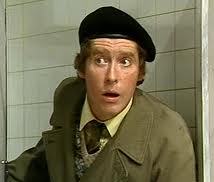
I watched BBC's program about the life of Michael Crawford last night. He looks at life through a happiness telescope, rather like his well-loved character in the comedy series Some Mothers Do 'Ave 'Em. See the story in Michael's own words here.

Michael Crawford, star of West End blockbusters Barnum, The Woman In White, and The Phantom Of The Opera is back on stage for the first time in seven years. He’s playing The Wizard of Oz in Andrew Lloyd Webber’s lavish new production at the London Palladium.  


Picture
What's amazing is that for the past seven years he has been battling the debilitating illness myalgic encephalopathy, or ME. After losing his strength, he was diagnosed with ME, the rare chronic fatigue syndrome that can be triggered by a viral infection. Apparently, a rubber suit he designed for himself to become the fat Count Fosco in The Woman In White caused the condition. After months of hard work and unbearable heat, what he thought was flue turned into meltdown. Dangerously dehydrated, the water he drank didn't contain enough nutrients to sustain health.

He moved to New Zealand, changed his diet, exercise and routine, and after four years, decided he wanted to work again. After Andrew Lloyd Webber contacted him about a new role, Michael accepted the part and has given his magical character new vitality in The Wizard of Oz.

Could you imagine how life would look through a cherished child's eyes? Everything would fill you with wonder. You'd have time to play and dream. Life would beckon you on to learn and explore. Everything could be fixed and transformed. What's stopping you?


<<Previous

    Author

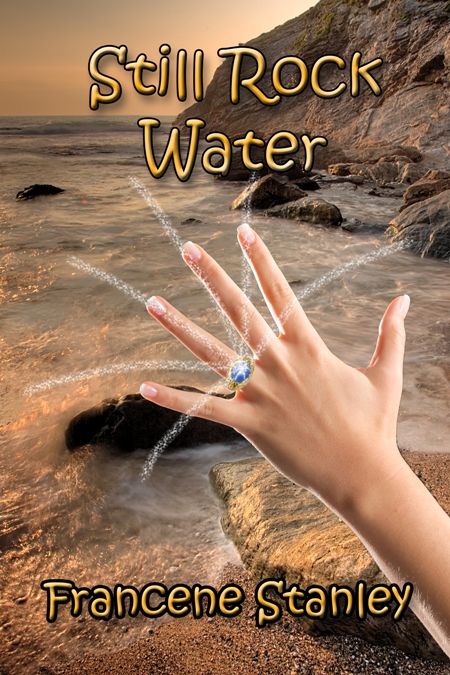
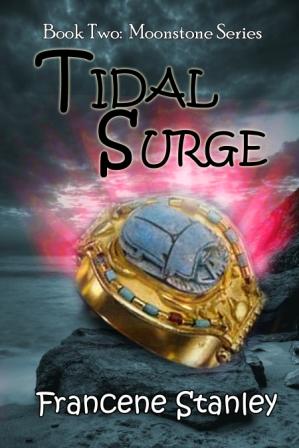
    Francene Stanley, author of many published novels. If you like my writing, why not consider purchasing one of my books? You'll see them on the sidebar below.
    Born in Australia, I moved to Britain half way through my long life.

    Picture

    Archives

    December 2013
    November 2013
    October 2013
    September 2013
    August 2013
    July 2013
    June 2013
    May 2013
    April 2013
    March 2013
    February 2013
    January 2013

    RSS Feed

    Categories

    All
    Catastrophe
    Creativity
    Family
    Life Experiences
    Mother
    News
    Novel Writing
    Novel-writing
    Retirement
    World

    Picture
    Picture
    Picture
    Picture
    Picture
    Picture
Powered by Create your own unique website with customizable templates.
Photo used under Creative Commons from Parker Knight