francene--blog. Year 2013
  • Home
  • Blog

April 10th

4/10/2013

 
An open letter to a celebrity.

Dear Stephen Hawking,

Please, forgive me for interrupting the important thoughts of the most famous physicist alive. There's no reason you should want to hear from me, but I've always felt a special connection, seeing as we were born on the exact same day, January 8, 1942. We arrived far apart. You went to Oxford, England and I touched down in Adelaide, South Australia. I live close by in England now, although we probably won't meet. Before we were born, did we wait on a cloud, chatting together about where we were headed? There's so much we don't know about where we came from.

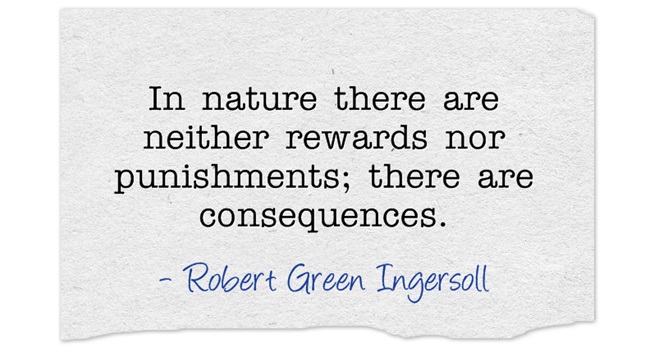
That's where I direct my efforts. I believe the Supreme Being who created us made us responsible. Every action, every thought, every idle word sets up reactions. When one thinks, that thought makes an impression on the Universal Consciousness. Nothing is lost or done in secret. This ensures the safety of your work.

You've used your wonderful mind in ground-breaking work in physics and cosmology, whereas I have lived a normal life with a working body. I can't begin to understand how hard it must be for you to carry on after your diagnosis of Amyotrophic Lateral Sclerosis at the age of 21. At the same time, I gave birth to my second child, walked everywhere and lived the life of a hippy. Now, artificial joints have replaced my hips and I'm in constant pain. However, I carry on walking, knowing full well how lucky I am to be able to do so when your body is atrophied.

I admire the way you continue working despite your debilitating illness. Your books, A Brief History of Time and The Grand Design have helped to make the fundamental questions of physics accessible to everyone: where did the universe come from? How and why did it begin? Will it come to an end, and if so, how? I haven't read them. I'm glad you can't see my blushes. You probably wonder why I admire you when I know nothing about your theories.

Maybe I'll read them one day. In the meantime, I'm writing novels about the decency and goodness in normal people and how thoughts are real things which influence circumstances. In Still Rock Water, my first book, Liliha inhabits the body of others for brief snatches in time.

But I want to ask you about your voice. I've heard that you use technology to translate your facial movements into speech. That's pretty incredible. I've read it contains a remnant of your original voice print. How could you have been so forward-thinking as to record your voice when you knew you'd lose your ability to move? And, most of all, where does your inner strength come from?

My husband argues that with enough money to pay for all the help you need, life is easy for you. I know that's not so. We're 71 now. I'm just beginning to feel my age—it must be worse for you.

Keep thinking and writing. That will maintain your joy of life. No, I can't say that. What happiness can you feel? Do you gaze at the perfection in nature to lift your spirits? What keeps you going when your body is dead? Perhaps you understand that, deep underneath, we are an individual spirit, using the body for our earthly life—and maybe we'll meet again on that cloud.


April 9th

4/9/2013

 
Picture
www.the80's.com
With the death of England's former Prime Minister, Baroness Margaret Thatcher, announced yesterday, I recall how her leadership affected my life.

First, the facts:

  • 13 October 1925 - Born Margaret Hilda Roberts in Grantham, Lincolnshire
  • 1951 - Married businessman Denis Thatcher
  • 1959 - Becomes MP for Finchley
  • 1970 - Made minister for education
  • 1975 - Elected Conservative leader
  • 1979 - Becomes UK's first female prime minister
  • 1982 - Falklands War
  • 1983 - Elected prime minister for second time
  • 1984 - Survives Grand Hotel bombing
  • 1984-5 - Takes on unions in Miners' Strike
  • 1987 - Wins third term in Downing Street
  • 1990 - Resigns as prime minister
  • 1992 - Stands down as MP and accepts peerage
  • 2002 - Retires from public speaking
  • 8 April 2013 - Dies after suffering a stroke

Picture
www.80's-fashion-fancy-dress.com
After a disastrous marriage, I left the land of my birth, Australia, primed to work as a nanny, since I knew how to care for children, if nothing else. In August 1987, I arrived in England with two suitcases and the clothes on my back. I'd disposed of all my possessions. No going back.

Within one week, I attended three interviews. One for the Brazilian ambassador, one with the actress, Jane Usher, and another with a couple who were planning to live in America and wanted to take their nanny with them. My status wouldn't allow that. After a final meeting, I accepted a position with an English couple with similar backgrounds to my own. She represented an Australian film company and he worked in Advertising. Their three-month-old baby was adorable and I soon settled in to their house in Camden.

During that summer, the great cyclone hit England overnight. I awoke to a roaring wind in the attic with rain dripping onto me. In a drowsy state, the situation reminded me of happy times camping with my family. I soon roused to find dire circumstances. London lost a good percentage of its great trees during the storm. Next morning, when I saw trees had collapsed onto cars and houses, I realized we'd had a lucky escape.

After that taste of what England had to offer, I stayed wary. However, with a booming economy, the world spread a feast before me. I partook of the pickings, shoulders padded, which typified a woman's attitude since the Prime Minister had showed what a woman could achieve.

After returning from a four month world trip with my employers, I met Mr. London and married a year later.

Undeterred by a lack of work training, I began to climb the ladder in the catering business. My first job was with General Portfolio, a former insurance company. I worked as a tea lady on one floor with two other women. Back then, we delivered morning and afternoon tea to all the workers. Business was booming and I enjoyed the training in the dining room where we served hot midday meals.

I progressed to a catering job at a hospital, stepped back a bit by running a canteen at a building site close to home, then went on to work at several local businesses until I secured a job at Elstree Film Studios as a buffet-hostess for the 'Hoobs', affiliated to the Muppets. The fifty employees made a children's television program. During the years of employment at the film studios, I served breakfast and lunch amongst the 'Tweenies', and many other production teams like 'Who Wants to be a Millionaire' as well as serving at banquets and prestigious award nights.

However, the economy took a backward turn in the early nineties and companies cut staff back. We could say England worked in unison with worldwide trends, but Margaret Thatcher instigated a part of those trends. She might not have induced the cyclone in 1987, but she tore through every aspect of British economic life and changed it fundamentally.

There was no such thing as the consumer in Britain in the late 1970s. When she left in 1990, politicians spoke of little else. She helped force the rise of the individual at the expense of the collective.

I rose from a brow-beaten woman to a self-assured citizen with rights and a status of my own.
Did your aspect rise during that boom-time?


Picture

April 8th

4/8/2013

 
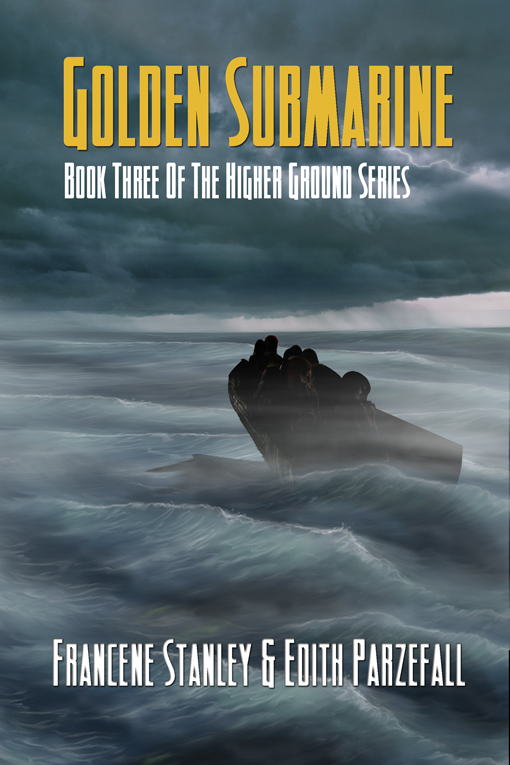
With the release today of our third book in the post-apocalyptic Higher Ground series, I'd like to give you a brief excerpt. Edith Parzefall and I wrote the novels together, each creating three character's point of view. I took on Hugo, a teenage boy. I nourished the sweet nature remembered from my son at sixteen, going on seventeen years.

Picture
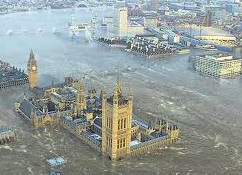
London at the beginning of the Great Flood.
Picture
Here's Hugo, from Golden Submarine, collecting wood in the forest covering Britland.

Corn World = Cornwall

Long Doom = London.


* * *

Until he met Sasha, he’d thought Cerridwen the most beautiful woman he’d ever seen.  But Sasha filled his dreams now.  What young man wouldn’t want to touch her, make life with her?

All his friends back in Hailing must be envious, knowing that he’d left on a manhood test with Cerridwen and Trevly.  They didn’t know he would venture beyond Corn World and go all the way to Long Doom.  He imagined the day he’d return and tell about his adventures.  They’d welcome him back with cheers—like a hero.  Hugo bent and selected cover for the women’s roof.

Maybe he’d never come back from this adventure.  Britland was huge.  His mam would miss him, so he’d better make sure he grew up fast and survived.  Didn’t want her grieving.  Nah.  Drop those dark thoughts and concentrate on the future.

With full arms, he made his way back towards the strip of trees behind the beach.  Hugo the Magnificent—had a nice ring.  He broke through the cover and strode up to Boris.  “Show me how you secure these.  You only need to tell me once.  I’ll do the job from then on all the way to Long Doom.”  Yes, Hugo the Magnificent.

“Weave them through the frame like this,” Boris said.

Hugo followed the older man’s lead.  “How old are you, Boris?”

“I’ve seen about twenty-five winters now.”

“I’ll bet you can tell some stories.”

“Nothing to tell, really.  Aron’s the one for stories.”

Hugo finished the task.  “We’ll have plenty of time when you’re ready to share.”

“I think you’ve grown a bit since I first met you.”

Hugo swelled with pride.

Boris scratched his head.  He looked wild since Aron had chopped off his long hair.  Before that, he’d kept it tied back.  Now his curls stood out like a hedgehog’s spikes.  Boris cocked his head and held still.  He sighed, then pulled two branches under each brawny arm all the way back, with Hugo following to pick up leafy twigs.

Boris dumped his load at the campsite.  “Rashio,” he called.  “Are you there, Kirk?”

Hugo dropped his armful and listened.

A figure moved towards them, arms clutching more wood.  “Will I do?” Aron asked.  Tall and handsome with a shaven chin, he flashed a wide smile.

Boris chuckled.  “It’s always good to know where you’re prowling.  But I wonder what the Stormy boys are up to.”

Aron grinned.  “You do?  I can only think of one place they might have strayed to.”

Puzzled for a moment, Hugo realized what the man meant.  “I’ll go and check the beach.”

“Don’t go blustering after them like a wild boar with a wasp on his tail,” Boris said.  “You don’t want to send all the animals for miles around off in the other direction.  I’m hoping for a nice hare or two for supper.”

“That sounds like a job for me,” Aron said.

“Yeah, yeah, yeah.  Everyone strolls through the forest while I do the real work.”

“Right.”  Hugo the Meek slunk off.  Wild pig indeed.  He’d better listen to Boris though.  He approached the beach with care.  Lucky he didn’t run ahead yelling.  There, behind some dense cover, Rashio and Kirk crouched, peering ahead.  His chance to surprise them enticed him to tread with silent steps.  They didn’t turn.  He could have whooped with joy.  Hugo the Stealthy.

* * *

Link to Golden Submarine, showing the two previous novels here.

Available today at Amazon.com here.

Also at Amazon.uk here.

Do you have a special remembered person?

April 7th

4/7/2013

 
Picture
Bracelet monitors workers. bigthink.com
With so many defenseless people in danger throughout the world, our admiration goes to civil rights and aid workers. They leave their homes and their normal life behind to help people achieve the right to vote, or to practice religion or free speech. Yet, year after year, news reports tell of their capture, injury or death.

The Civil Rights Defenders campaign group developed the technology to help workers in war zones and other areas of conflict. When triggered, the hi-tech personal alarm uses phone and sat-nav technology to warn that its wearer is in danger. Warnings are sent in the form of messages to Facebook and Twitter to rally support and ensure people do not disappear without trace.


Picture
www.bbc.co.uk
The chunky bracelet has mobile phone technology buried within it that can send prepared messages when the gadget is triggered. Alerts can be sent manually by a rights worker if they feel under threat or are triggered automatically if the bracelet is forcefully removed. The alarm sends out information about its owner and where they were when they were attacked. Other staff nearby will also be alerted so they can start to take action to help anyone in distress.

Civil Rights Defenders wants people to sign up to monitor the bracelets of individual rights workers via social media. It hopes the global involvement will act as a deterrent to anyone planning attacks on aid workers. 55 bracelets will be given out by the end of 2014.

These endangered volunteers represent us—all that is good and kind and decent in humanity. They stand for dignity and justice in their work to help people less fortunate than those of us who live in a free society.

Based in Stockholm, Sweden you can visit and 'like' their facebook page here.


April 6th

4/6/2013

 
Picture
www.intellasia.net
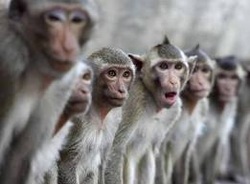
Peer group pressure can be explained if we observe animals' behavior.

A study has found that crested macaque monkeys follow friends before family. Gaze following is very important in macaque society, helping the animals to find food or spot potential danger. This reflects the importance of friendship in complex societies, where animals live together and rely on one another. In some species, friends are probably as important as family and dominance status.


Picture
www,telegraph.co.uk
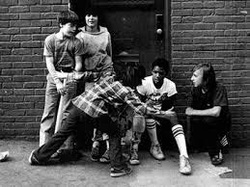
Teenagers to want to copy their friends by wearing certain clothes or listening to a particular type of music. Some kids give in to peer pressure because they want to be liked, to fit in, or because they worry that other kids may make fun of them if they don't go along with the group. Others may go along because they are curious to try something new that others are doing. The idea that everyone's doing it may influence some kids to leave their better judgment behind.

While peer pressure might be the reason for trying their first cigarette or can of beer, it can also be invaluable in teaching them life skills and a sense of loyalty and leadership. For boys, friends act primarily as companions, people with whom they can play football, share a joke, hang out and listen to music. For girls, friends are people with whom they can share secrets, worries and anxieties. Without companions, it's more difficult to learn about social skills and relationships.


Picture
minglecity.com
I've seen the bad side of peer pressure.

Forty years ago I moved to a small town in South Australia. During the summer holidays, my tall, popular son became a Christian. When he started high school, we chose an area school, mainly for children from local farms, one hour away on the school bus. He came home with bruises and a shadow of his former jovial self. I spoke to the head teacher and the bus driver about the problem. It turned out he had loudly declared he would always turn the other cheek. The other students rose to the challenge. They punched him, even younger, smaller boys, for over a year. The Christian bus driver couldn't suggest any solution and neither could the head master. At last, Kym took action and went over the top defending himself; eventually becoming so strong nobody could get the better of him. This life-lesson resounds within me even now. He must have learned that might is right.

Although he remained loving towards me, peer-group pressure wiped out all the positive thinking and optimism he had developed. I wrongly thought an escape to the country might save the children from bad influences. Maybe the extra two hours away on the school bus tilted the balance.

My wonderful son died in an accident at the age of 28 years.


April 5th

4/5/2013

 
Picture
blog.snapbomb.com
With libraries in the UK set to store the top 100 websites as well as other information, bloggers perk up. However, they won't choose small enterprises like us. Click here for the incredible list of the sites which should be preserved for historians and researchers.

Millions of tweets, Facebook status updates and even a blog about a bus shelter in the Shetlands are to be preserved for the nation. The British Library and four other legal deposit libraries have the right to collect and store everything published online in the UK.  Around a billion pages a year will be available for research.

The archive will cover 4.8 million websites and will include magazines, books and academic journals as well as alternative sources of literature, news and comment such as Mumsnet, the Beano online, Stephen Hawking's website, and the unofficial armed forces' bulletin board, ARRSE.

Picture
www.bestourism.com
A spokesman from the British Library said while people may think information on the web lasts forever, huge amounts of research material has already disappeared, for instance material posted during the 7/7 bombings.

The British Library is also asking for advice from the public as to which websites should be preserved to give an accurate picture to future generations. As part of the launch of the process, the British Library has commissioned a survey of the top 100 websites that ought to be preserved for historians and researchers. Among the sites recommended to keep material from are eBay, Facebook, Twitter, Tripadvisor and Rightmove.


Picture
www.telegraph.co.uk
Meanwhile teachers have named the top 100 books. Below the top 20 are listed.


1. Pride and Prejudice: Jane Austen

2. To Kill a Mockingbird: Harper Lee

3. Harry Potter series: JK Rowling

4. Wuthering Heights: Emily Bronte

5. Jane Eyre: Charlotte Bronte

6. Nineteen Eighty-Four: George Orwell

7. The Lord of the Rings series: JRR Tolkien

8. The Book Thief: Markus Zusak

9. The Hobbit: JRR Tolkien

10. The Great Gatsby: F Scott Fitzgerald

11.. The Kite Runner: Khaled Hosseini

12. The Hunger Games series: Suzanne Collins

13. The Time Traveler's Wife: Audrey Niffenegger

14. The Chronicles of Narnia series CS Lewis

15. Of Mice and Men: John Steinbeck

16. Birdsong: Sebastian Faulks

17. His Dark Materials series: Philip Pullman

18. The Gruffalo: Julia Donaldson+ Axel Scheffler

19. The Catcher in the Rye: JD Salinger

20. Life of Pi: Yann Martel

I take a small amount of hope from the newly released books like The Time Traveler's Wife and the Harry Potter series. Even if my blog doesn't rate saving for the nation, at least my novels stand a chance.


April 4th

4/4/2013

 
Picture
www.howstuffworks.com
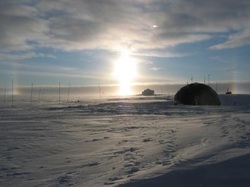
In the UK, the temperatures in March were the second coldest ever recorded. The last blow from similar weather came one hundred years ago.

This went on to increase heating bills at a time when prices for fuel, electricity and gas are rising. The cold really affects those people who are immobile, putting elderly people who still live at home at risk. The poor are always the most vulnerable because heating costs money. They can sit under a blanket dressed in their warmest clothing, but they still have to breathe cold air. I remember my Australian grandmother, sitting in a chair, wearing her fur coat during the day. The low temperatures in Adelaide never compared to the big freeze here in England.


Picture
esciencenews.com
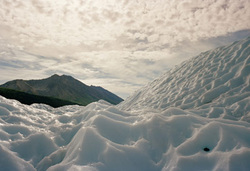
I read that the world is experiencing an ice age at the moment. It began 2.6 million years ago at the start of the Pleistocene epoch. Experts concluded this because the Greenland and Antarctic ice sheets still exist.

Perhaps the ice is about to spread and encroach more of the Earth. Or is this just my imagination working out a new plot for a science fiction book?

I can't wait for the warmer weather. Spring, where are you?


Picture

April 3rd

4/3/2013

 
Picture
www.bbc.co.uk
In a recent study, the classes in the UK have been divided into seven distinct brackets. More than 161,000 people took part in the Great British Class Survey. Rather than the rich, the middle-class and the poor, they have been separated further. See the full story here.

Elite: the most privileged group in the UK, distinct from the other six classes through its wealth.

Established middle class: the second wealthiest, the largest and most gregarious group.

Technical middle class: a small, distinctive new class group which is prosperous but scores low for social and cultural capital. Distinguished by its social isolation and cultural apathy.

New affluent workers: a young class group which is socially and culturally active, with middling levels of economic capital.

Traditional working class: scores low on all forms of capital, but is not completely deprived. Its members have reasonably high house values, explained by this group having the oldest average age at 66.

Emergent service workers: a new, young, urban group which is relatively poor but has high social and cultural capital.

Precariat, or precarious proletariat: the poorest, most deprived class, scoring low for social and cultural capital.

My husband and I fall into the lowest level.


Picture
www.thamsevalleybirds.co.uk
Yet, throughout my long life, I've always felt a special protection, no more so than when, stranded by circumstances and without the love of immediate family, I found myself alone for the first time in my life. In my need, I reached up to a Higher Being and received love. During that worst part of my life, while travelling on a bus in the rain, the shower stopped when I alighted. Could have been circumstance—probably was. Yet, I took that act of nature as personal.

Have you ever wondered why some people live longer than others? Is there a grand purpose or does their good fortune depend on health, genetics and fate?

I've always lived a healthy lifestyle, eating the right foods, exercising and thinking in a positive way. My parents and grandparents lived to their mid-eighties. As to fate, who can say when an accident will knock them down?


Picture
alamoheightsunitedmethodistchurch.blogspot.com
Maybe there is more to be discussed about positive thinking.


Under the Universal Law of Cause and Effect, every action, every thought, every idle word sets up reactions. I've always cared about each person I met. Obnoxious individuals need extra consideration. Something must be causing their bad behavior and I need to understand. I remain polite but firm. If they continue, I avoid them. Everyone receives my admiration for their special qualities.


My son Kym died in his late 20's and Karen died in her 40's. Outliving two of my three children, I wonder why I live on. What extra part of my live do I need to fulfill? Is my writing important? Each novel demonstrates how thoughts are real things. Do I remain to support my second husband, two years older, and yet so much fitter? He's not as mentally strong as I am and would never continue to look after himself the way he does with me by his side. His only hobby is cooking. If he stopped planning elaborate meals, the purpose in his life would drop away.

I don't expect anyone to answer my questions. They're too complex. However, give some thought to your own social level, existence and purpose. If you can work it out, I'd love to hear your conclusion, short-term as well as for the future.


April 2nd

4/2/2013

 
Picture
www.fancydressball.co.uk
For years, scientists have been looking for alternatives to synthetic fibers like nylon and lycra, or spandex, which are made from oil—a non-renewable resource.

Found deep undersea, Hagfish may have shown the way.

Hagfish slime has the potential to provide a natural and renewable alternative. The jawless, spineless hagfish is a primitive creature that lives at the bottom of the ocean and dates back as far as 500 million years - but it exudes a very special slime, which could provide the clothing of the future.

Dinosaurs became extinct about 60 million years ago, but a hagfish fossil—complete with evidence of slime-producing glands—has been found dating back 330 million years.


Picture
oceanlink.info

A hagfish has about 100 of these glands that run along the side of its body from which they exude a milky, white substance, comprised of mucus and thread. When this substance mixes with seawater, it expands, creating huge amounts of clear slime, composed of very thin—but super-strong and stretchy—fibers. When stretched and dried, they become silky.

Because the slimy 1ft long fish don't respond well to captivity, scientists are trying to work out a way to produce the slime fibers artificially in the lab. Before, they've tried to replicate spider silk, but the large proteins in the fiber make it difficult. Hagfish slime has similar properties to spider silk and the proteins are smaller.


Picture
mediaquay.com
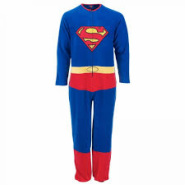
Researchers at the University of Guelph in Canada are trying to make threads using genetically engineered bacteria, bypassing the hagfish entirely. If they succeed in perfecting their thread, scientists hope to work closely with the textile industry to bring some products to market. Scientists believe the new product could be turned into tights or breathable athletic wear, or even bullet-proof vests. What would stop them from making a onesi or a superman suit.

While this concept might be offputting, stay focused. I remember about 15 years ago when I saw the first sweatshirt made with a miraculous fluffy texture. It turned out to be made from recycled plastic bottles.


April 1st

4/1/2013

 
Picture
latinamericanhistory.about.com
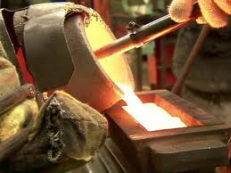
When I think of gold, my imagination takes me to buried treasure in England's fields, the lost Inca gold or King Tutankhamen's tomb. But how much of the precious, glinting metal exists?

Estimates of found gold differ widely. One of the world's richest investors suggests the total amount could fit into a cube with sides of just 20m (67ft). This seems to be a small amount.

The annual gold survey from Thomson Reuters GFMS is 171,300 tones. However, other people don't agree with this figure. Estimates range from 155,244 tones, marginally less than the GFMS figure, to about 16 times that amount.

The reason the estimates don't match concerns the past. Gold has been mined for 6,000 years. The first gold coins were minted in about 550 BC under King Croesus of Lydia, a province in modern-day Turkey, and quickly became accepted payment for merchants and mercenary soldiers around the Mediterranean. Up until 1492, the year Columbus sailed to America; GFMS estimates that 12,780 tones had been extracted.


Picture
www.profimedia.si
But, primitive mining techniques used up to the Middle Ages could mean that this figure is much too high, and that a more realistic total is just 297 tones. Tutankhamen's coffin was made from 1.5 tones of gold. Furthermore, there is no record of gold from other ransacked tombs.

Today, not even China is open about how much gold is mined. Illegal mining is taking place in Columbia and other countries as well. The US Geological Survey estimates, there are more than 52,000 tones of minable gold still in the ground and more is likely to be discovered.

Up to now, gold has never gone away. It has always been recycled. All the gold mined throughout history is still in existence in the above-ground stock. That means that if you have a gold watch, some of the gold could have been mined by the Romans 2,000 years ago.


Picture
www.businessinsider.com
All that is changing.

The British Geological Survey states that about 12% of current world gold production finds its way to the technology industry, where it is often used in such small quantities, in each individual product, that it may no longer be economical to recycle it.

In short, we are munching through gold for the first time.


Forward>>

    Author

    Francene Stanley, author of many published novels. If you like my writing, why not consider purchasing one of my books? You'll see them on the sidebar below.
    Born in Australia, I moved to Britain half way through my long life.

    Picture

    Archives

    December 2013
    November 2013
    October 2013
    September 2013
    August 2013
    July 2013
    June 2013
    May 2013
    April 2013
    March 2013
    February 2013
    January 2013

    RSS Feed

    Categories

    All
    Catastrophe
    Creativity
    Family
    Life Experiences
    Mother
    News
    Novel Writing
    Novel-writing
    Retirement
    World

    Picture
    Picture
    Picture
    Picture
    Picture
    Picture
Powered by Create your own unique website with customizable templates.
Photo used under Creative Commons from Parker Knight